Interchange AirJet Conveyor Gas Dryer – The Most Reliable Gas Dryer on the Market

Interchange

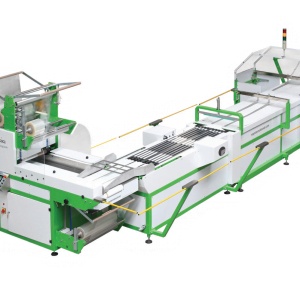
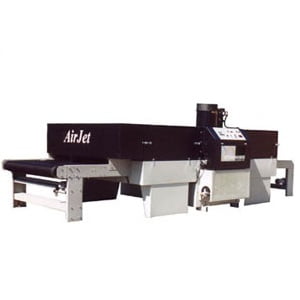
The Interchange AirJet Conveyor Gas Dryer is the flagship industrial gas dryer from Interchange Equipment, Inc. — the New Jersey manufacturer with industry lineage tracing back to Precision Screen Machines (the makers of the legendary Precision Ovals and Vortex Dryers). The AirJet is engineered for screen printers who demand maximum performance, energy efficiency, and unmatched reliability on high-volume production lines. At its heart: the patented Air Deflector Recirculation System — which Interchange claims delivers up to 30% greater energy efficiency vs. conventional gas dryers — paired with the exclusive Optic Sensor Belt Tracking System that keeps the conveyor running straight without manual adjustment. Add a 500,000 BTU stainless steel burner, Allen-Bradley PLC touchscreen with 10 saved drying profiles, high-velocity jet nozzles, and expandable modular chamber design — and you have an industrial dryer ready to cure plastisol, water-based, discharge, DTG, DTF, and hybrid prints at full production speed for the next 15+ years. Available in Textile and Graphic models. ETL & CE approved.

Burner: 500,000 BTU Stainless Steel — Natural Gas or Propane
Energy Efficiency: Up to 30% More Efficient Than Conventional Gas Dryers
Belt Tracking: Exclusive Optic Sensor — Automatic, Self-Correcting
Standard Chamber: 12 ft Oven Section — Modular & Expandable
Belt Widths: 48″ · 60″ · 76″ · 86″ (up to 110″ industrial)
Control System: Touch Panel Display with 10 Saved Drying Profiles
📞 Talk to an Expert: (512) 454-0505  |  💬 Live Chat  |  📧 [email protected]

Price range: $41,400.00 through $121,250.00

Description

Flagship Industrial Gas Conveyor Dryer · Made in USA

Interchange AirJet Conveyor Gas Dryer

The Most Reliable Gas Dryer on the Market — Flagship Industrial Curing with Optic Sensor Belt Tracking & Touchscreen Recipe Control

🇺🇸 Interchange Equipment · Passaic, NJPatented Air Deflector TechAllen-Bradley PLC ControlETL & CE ApprovedFREIGHT QUOTED · BUILT-TO-ORDER
Why River City Supply

Same Interchange AirJet. Better Buying Experience.

The AirJet is a 15-year production investment — not a cart-and-checkout decision. You deserve an equipment partner who’ll spec it right, coordinate the install with trades experienced on industrial gas equipment, and stand behind the purchase for the full life of the machine.

💰

Direct Factory Pricing — No Middleman Markup

We’re an authorized Interchange dealer buying direct from the Passaic, NJ factory. We can quote the AirJet at or below competitor pricing, bundle accessories (donut probes, cooling bridges, exhaust hoods, air compressors), and consolidate freight for better rates.

🔧

Real Equipment Support from Shop-Floor Experience

We’ve been speccing, selling, and installing industrial conveyor dryers since 2008. When you call us about the AirJet, you talk to someone who knows the platform inside and out — we’ll help you pick between textile vs. graphic models, sort out compressed air requirements for the Optic Sensor tracking, and plan the install.

🏭

Full Interchange Factory Warranty Preserved

Your Interchange factory warranty stays fully intact. But your first call goes to us in San Antonio — not an 800 number across the country. We’ll troubleshoot, source parts, coordinate service, and escalate faster than going direct.

📦

Built-to-Order in Passaic, NJ — Domestic Lead Times

The AirJet is manufactured entirely in New Jersey. Typical lead times run 6–10 weeks from order to delivery — significantly faster than European-built industrial dryers (ROQ Tunnel/SAHARA typically run 8–12 weeks). Ask us about current in-stock inventory and demo unit availability.

✓ Industry Heritage Since the 1970s

Built on a Legacy Every Screen Printer Recognizes

Interchange Equipment isn’t a new company. Located in Passaic, NJ — the same New Jersey screen-printing corridor that produced Precision Screen Machines (makers of the legendary Precision Ovals and Vortex Dryers) — Interchange has been manufacturing industrial gas and electric dryers for over two decades. The company’s leadership descends directly from that Precision heritage, and the AirJet platform reflects that engineering DNA: overbuilt, serviceable, and designed to outlast three or four generations of cheaper dryers.

“The machines are solid and simple production dryers. Tough, reliable and easy to maintain. Ongoing customer support is responsive.” — Interchange customer, running AirJet dryers since 2010

What Makes the AirJet the Flagship

🔥 500,000 BTU Stainless Steel Burner

Double the heat output of compact dryers. The AirJet’s 500,000 BTU stainless steel burner delivers rapid heat-up, aggressive recovery after loading surges, and the raw capacity to run 60″ and 76″ belts at full production speed on thick plastisol or high-deposit prints. Stainless steel construction stands up to continuous-duty industrial cycles without corrosion or burn-through.

🌀 Patented Air Deflector Recirculation — 30% More Efficient

The signature Interchange technology. Heated air is captured and recirculated through the chamber instead of exhausted straight out — delivering up to 30% better energy efficiency than conventional gas dryers (per Interchange). On a production line running 12+ hours/day, that savings compounds into thousands of dollars per year in reduced gas bills — often enough to pay for the dryer’s financing entirely.

👁️ Exclusive Optic Sensor Belt Tracking System

The AirJet’s differentiator over the MD-8 and most competitors. An optic sensor continuously monitors belt position and automatically corrects tracking via pneumatic actuators — no manual adjustment, no daily tweaking, no belt damage from misalignment. Requires 3 CFM compressed air at 100 PSI. Eliminates one of the most common daily headaches on conventional gas dryers.

📱 Touch Panel Display with 10 Saved Drying Profiles

Allen-Bradley PLC-controlled touchscreen interface: main screen with on/off for heat, belt, blower, exhaust, cool section, and IR. Set temperature and belt speed (or retention time) directly. Save up to 10 drying profiles (Profiles 1–5 and 6–10) for one-touch recall — plastisol recipe for dark tees, water-based recipe for athletic, DTF adhesive recipe, etc. Heat graph displays actual vs. set temp in real time. Maintenance reminders built in.

💨 High-Velocity Jet Nozzles + Enlarged Heat Plenum

Replaces the standard air knives found on conventional gas dryers with higher-velocity jet nozzles that force heated air into direct contact with the ink surface. Combined with the enlarged heat plenum, this delivers faster moisture evacuation on water-based and discharge inks — the airflow that IR-only dryers fundamentally cannot match. Optional side air nozzles add even more lateral airflow coverage.

🧩 Modular, Expandable Design

Today you need a 12-ft chamber and 48″ belt — in three years you need 16-ft chamber and a split-belt setup to match a second press. The AirJet’s modular construction lets you add chamber sections, extend infeed/outfeed, or add IR/cooling modules without replacing the dryer. The investment scales with your business instead of becoming obsolete.

📊 On-Board Diagnostic System

The AirJet continuously monitors its own burner performance, belt speed, chamber temperature, exhaust function, and safety systems — and reports faults or anomalies directly on the touch panel instead of leaving your operator to guess. When something goes wrong, you know exactly what and where in seconds.

🎯 Textile & Graphic Models — Tuned for Your Application

Interchange offers two variants: Textile (optimized for garment curing — plastisol, water-based, discharge) and Graphic (optimized for rigid substrates — banners, decals, POP displays, digital inkjet prints). Same core platform, but internal airflow and temperature control are tuned differently for each application to maximize cure consistency.

🔀 Optional Split-Belt + IR/Hot-Air Combi Configuration

Configurable options not available on every competitor: split-belt operation (two belts, independent speed adjustment — run plastisol on one side and water-based on the other), and the Combi configuration that adds IR curing to the hot-air chamber for even faster throughput or specialty applications like pretreat drying on DTG garments.

The AirJet Touch Panel — Recipe-Saving, Heat Graphing, Self-Diagnosing

Most gas dryers leave you with analog knobs and a thermocouple display. The AirJet’s Allen-Bradley PLC-driven touch panel is closer to what you’d find on a ROQ automatic press than a traditional conveyor dryer. Here’s what the interface actually does:

Main Screen

One-Touch Subsystem Control

  • • On/Off Heat
  • • On/Off Belt
  • • On/Off Blower
  • • On/Off Exhaust
  • • On/Off Cool Section
  • • On/Off IR-Quartz Tubes
  • • Start Up / Shutdown sequence
Production Control

Precision Setpoints

  • • Set Temperature
  • • Belt Speed or Retention Time
  • • Belt Speed Parameters
  • • Real-time alarms display
  • • Maintenance reminders
  • • Heat Graph (actual vs. setpoint)
Recipe System

10 Saved Drying Profiles

  • • Saved Drying Profiles 1–5
  • • Saved Drying Profiles 6–10
  • • One-tap recall by name
  • • Store temp + belt speed per recipe
  • Save plastisol / water-based / discharge / DTG / DTF profiles and switch between them in seconds — no manual recalibration.

Configure Your AirJet

Every AirJet is built-to-order at the Interchange factory in Passaic, NJ. Four choices determine your exact build:

Step 1

Belt Width

  • 48″ — standard auto-line workhorse
  • 60″ — high-volume, oversized prints
  • 76″ — maximum throughput, large format
  • 86″ — widest textile config
  • Industrial variants up to 110″ for glass, solar, automotive.
Step 2

Heat Chamber Length

  • 8 ft — compact high-volume
  • 12 ft (standard) — most shops
  • 16 ft — heavy production or thick prints
  • Modular — add chamber sections later as shop grows.
Step 3

Fuel Type

  • Natural Gas — lowest operating cost
  • LP Propane — no-NG shops
  • Electric Model — gas-free alternative
  • Electric AirJet uses same chamber design with electric heating elements.
Step 4

Model Variant

  • Textile — garment curing (plastisol, water-based, discharge)
  • Graphic — rigid substrates (POP, banners, decals, digital)
  • Airflow and temp control tuned differently per variant.

Factory options & add-ons:

Combi Configuration (IR + hot air combination for faster cure or DTG pretreat drying) • Split-belt operation (two belts, independent speed control) • Side air nozzles (additional lateral airflow coverage) • Hi-Temp feature (elevated temperature range for specialty substrates) • Cooling section (post-cure fabric stabilization) • Extended infeed/outfeed (longer catch and staging zones) • HEPA filter option (clean-room or food-contact applications) • Refrigerated cool section (industrial applications) • Allen-Bradley PLC upgrades (networked diagnostics, line integration)

Factory-Verified Specifications At-a-Glance

All specifications below are drawn from the Interchange official factory brochure. Use these to confirm your shop’s utility hookups, floor space, and production fit before ordering.

Spec

Burner

Value

500,000 BTU stainless steel — natural gas or LP propane

Spec

Energy Efficiency

Value

Up to 30% more efficient than conventional gas dryers (per Interchange)

Spec

Belt Tracking

Value

Exclusive Optic Sensor system — automatic, self-correcting

Spec

Control System

Value

Allen-Bradley PLC with touch panel display · 10 saved drying profiles

Spec

Heat Distribution

Value

Higher-velocity jet nozzles + enlarged heat plenum

Spec

Standard Chamber

Value

12 ft oven section (8 ft and 16 ft also available)

Spec

Typical Overall Length

Value

28 ft (8 ft infeed + 12 ft chamber + 8 ft outfeed)

Spec

Belt Widths

Value

48″ · 60″ · 76″ · 86″ textile models (up to 110″ industrial)

Spec

Model Variants

Value

Textile · Graphic · Combi (IR + hot air) · Electric

Spec

Gas Connection

Value

3/4″ NPT · 6″–12″ water column pressure

Spec

Electric Service

Value

208/230V · 3-phase · 35 amp

Spec

Compressed Air

Value

3 CFM @ 100 PSI (required for Optic Sensor belt tracking)

Spec

Belt Material

Value

High-temp mesh with auto-tracking system

Spec

Safety Certifications

Value

ETL & CE approved · UL-compliant commercial gas heating equipment

Spec

Country of Origin

Value

USA — manufactured in Passaic, NJ

What’s Included

Interchange AirJet Conveyor Gas Dryer (built to your configuration)
500,000 BTU stainless steel burner assembly
12 ft heat chamber section (or 8 ft / 16 ft per your spec)
8 ft infeed and 8 ft outfeed conveyor sections (standard)
Patented Air Deflector recirculation system integrated into chamber
Optic Sensor automatic belt tracking system with pneumatic actuators
High-velocity jet nozzle array with enlarged heat plenum
Allen-Bradley PLC touch panel control system (with 10 drying profile slots)
On-board diagnostic system with heat graph display
Slide-out E-Z clean filter drawer
Access door for chamber cleaning & service
Fresh air intake and exhaust connection hardware
Factory operating manual & ETL/CE compliance documentation
Factory warranty (confirm current terms at time of quote)

Installation & Utility Requirements

The AirJet is a serious piece of industrial equipment — before ordering, confirm your shop has the necessary utilities and space. Here’s the checklist:

🔥 Gas Supply

3/4″ NPT gas line delivering 6″–12″ water column pressure. Natural gas preferred for operating cost; LP propane for shops without NG. Due to the 500,000 BTU burner, ensure your gas meter and regulator are rated for the load. Certified gas plumber install required.

⚡ Electrical Service

208/230V, 3-phase, 35 amp service for gas models (electric models draw significantly more — request quote-specific spec). 3-phase is non-negotiable; single-phase shops need a phase converter or service upgrade first.

💨 Compressed Air (Required)

3 CFM @ 100 PSI required for the Optic Sensor belt tracking system. Most shops already have shop air at this level for their automatic press. If you don’t — we’ll spec a compressor that covers both dryer and future press growth.

♨️ Exhaust Ventilation

Customer-supplied exhaust ductwork sized for the 500,000 BTU burner — larger than the MD-8’s 6″ duct. Route to roof or wall penetration per local code. We’ll spec the correct CFM and duct diameter for your specific AirJet build.

📐 Floor Space & Clearance

~28 ft overall length for the typical 12-ft-chamber configuration (belt width affects unit width — 48″ belt → ~5.5 ft wide frame; 86″ → ~8 ft wide). Minimum 12″ clearance from walls. 10+ ft ceiling recommended for exhaust routing.

🛠️ Installation Team

Certified gas plumber (for 500,000 BTU hookup), licensed electrician (3-phase 35A), forklift or rigging crew for positioning, and an Interchange-trained commissioning tech. Most AirJet installs take 2–4 days including PLC commissioning and operator training.

Pre-install fit check:

Send us photos or a floorplan sketch of your production floor, your electric panel label, gas meter photo, and existing exhaust routing. We’ll verify AirJet compatibility and flag any service upgrades needed before you commit to the order — prevents costly surprises during install.

Best For

✓ High-volume auto-line production (1,500+ pcs/hr)
✓ Plastisol (standard, athletic, high-deposit, specialty)
✓ Water-based & discharge inks at production speed
✓ DTG (direct-to-garment) cure & pretreatment drying
✓ DTF (direct-to-film) adhesive curing at scale
✓ Hybrid workflows (plastisol + water-based + discharge)
✓ Contract & retail-quality production shops
✓ Shops running multiple presses into one dryer
✓ Shops planning 10+ year production horizons
✓ Graphic applications (POP, banners, decals, digital prints)
✓ Industrial applications (membrane switches, nameplates, electronics)
✓ Shops that need recipe-saving for 5+ ink systems

Concerns We Hear — Answered Straight

A flagship industrial dryer is a big decision. These are the real concerns shops bring us when evaluating the AirJet — and the honest answers we give.

“Is the AirJet worth the step up from the MD-8?”

Depends on your production scale and growth trajectory. If you run under 1,000 pieces/day on a single 48″ or 60″ belt and your shop footprint is tight, the MD-8 often makes more sense — same patented Air Deflector tech, just smaller and less expensive. If you run 1,500+ pieces/day, need recipe-saving for multiple ink systems, want the Optic Sensor auto-tracking (which eliminates a real daily headache), or plan to expand chamber/belt over the next 5 years — the AirJet pays back the difference quickly through reduced daily fiddling, lower gas bills, and longer service life. We’ll help you run the numbers.

“How does the AirJet compare to an M&R Sprint or ROQ Tunnel/SAHARA?”

The AirJet competes directly with the M&R Sprint at a similar tier — both are premium American-made industrial gas dryers. Shops we’ve worked with generally report the AirJet has equal or better gas efficiency and simpler service (the AirJet’s on-board diagnostics help). Against the ROQ Tunnel/SAHARA: the ROQ platforms offer more bespoke customization (dual-zone chambers, heat exchanger for no-yellowing on whites, GE MIX power switching) at higher investment and longer lead times (European freight). The AirJet delivers most of that capability at a lower price with a 6–10 week domestic lead time. Call us — we’ll help you pick honestly.

“The 30% energy-savings claim — is it real?”

That figure is Interchange’s official claim comparing the Air Deflector recirculation system to conventional vent-and-reheat gas dryers. Real-world savings depend heavily on your baseline (what you’re comparing to), utility rates, runtime patterns, and how consistently operators optimize the dryer. Shops that upgrade from older-generation vent-style gas dryers commonly report measurable monthly gas savings — often enough to offset a large chunk of the financing payment. Shops upgrading from a recent-vintage Sprint or equivalent see smaller gains. We can help you model your specific case.

“What about yellowing on white and light fabrics?”

Gas combustion byproducts can cause yellowing on white fabrics if exhaust isn’t properly managed. The AirJet is a direct-fired gas dryer without a dedicated heat-exchanger option like the ROQ Tunnel/SAHARA’s GP feature. In practice, most shops run whites without issues when exhaust is correctly sized and installed. If you print high volumes of white-on-white, pima cotton, or light pastels and yellowing has been an ongoing issue, consider specifying the AirJet’s Combi (IR + hot air) configuration, or evaluate the ROQ with GP option as an alternative.

“How long does the AirJet actually last?”

Interchange customers on forum threads report running their AirJets for 10–15+ years of continuous production. The stainless steel burner, Allen-Bradley PLC, and overbuilt frame construction are all selected for industrial duty cycles. Consumables (belts, filters, thermocouples) need routine replacement — but the core chassis is built to be rebuilt rather than replaced. We’ve sold used AirJets at 8–10 years old to shops who then ran them another decade.

“What’s the ongoing maintenance burden?”

Low compared to what you’d expect for a 500,000 BTU industrial dryer. Weekly: blow out the slide-out filter drawer. Monthly: grease the blower fan drive shaft bearings with high-temp grease; inspect the Optic Sensor belt tracking for debris. Annually: certified gas tech verifies burner tuning and safety systems; PLC firmware check. Belt replacement uses the same alligator splice system as the MD-8 — 30-minute job. The on-board diagnostic system flags most issues before they become failures.

“What happens if something breaks?”

Interchange stocks parts in Passaic, NJ with US freight to your door — no ocean-freight delay. The Allen-Bradley PLC is an industry-standard platform; any industrial controls tech can read and diagnose it. For anything beyond routine, Interchange’s factory tech support is responsive and we coordinate warranty claims on your behalf. If the AirJet is down on a Tuesday morning, we’ll have someone on the phone with you inside an hour.

“Do I still need a donut probe with all this tech?”

Yes. The AirJet’s heat graph display shows chamber air temperature vs. setpoint — not actual ink surface temperature on your specific fabric. An Atkins donut probe (Cooper-Atkins 50008-K) is still the only way to verify you’re hitting cure temp on every ink/fabric combo you run. We stock them — ask us to include one with your AirJet order.

💰 Equipment Financing Available

Finance the AirJet — Let the Energy Savings Cover the Payment

Equipment financing is available on the AirJet through our financing partner. Section 179 tax advantages may apply for qualifying businesses — own the equipment outright with payments structured to fit your shop’s cash flow. Shops upgrading from older-generation gas dryers often find the AirJet’s energy-efficiency savings substantially offset the monthly financing payment from day one.

Talk to an Equipment Expert

Call, email, or chat with us — tell us your production volume, belt width preference, textile vs. graphic application, and gas vs. electric preference. We’ll put together a complete configured quote with freight estimate and lead time within 1 business day.

Call

(512) 454-0505

Toll-Free: (855) 841-9733
Mon–Fri, 9am–5pm CT
Email

[email protected]

Quote within 1 business day
Live Chat
💬 Chat With Us
Chat icon in lower-right corner

Technical Specifications

Complete Technical Specifications

All specifications below are drawn from the official Interchange factory brochure and product datasheets.

SpecificationDetail
ManufacturerInterchange Equipment, Inc. — 90 Dayton Avenue, Passaic, NJ 07055. 20+ years of screen printing equipment manufacturing; lineage descends from Precision Screen Machines (makers of the legendary Precision Ovals and Vortex Dryers). US sales: 1.800.822.5457. Email: [email protected].
Product NameInterchange AirJet Conveyor Gas Dryer
Product TypeFlagship industrial forced-air conveyor gas dryer (Textile or Graphic variants)
Model VariantsTextile (garment curing) · Graphic (rigid substrates) · Combi (IR + hot air) · Electric (gas-free)
Burner500,000 BTU stainless steel — continuous-duty rated
Claimed Energy EfficiencyUp to 30% more energy-efficient than conventional gas dryers (per Interchange — comparing Air Deflector recirculation vs. vent-and-reheat designs)
Patented TechnologyAir Deflector Recirculation System — recirculates heated air through the chamber for balanced curing and substantial cost savings
Belt TrackingExclusive Optic Sensor automatic belt tracking system — requires 3 CFM @ 100 PSI compressed air
Control SystemAllen-Bradley PLC-driven touch panel display — on-board diagnostics, heat graph (actual vs. set), maintenance reminders, 10 saved drying profiles (Profiles 1–5 and 6–10)
Heat DistributionHigher-velocity jet nozzles (replaces standard air knives) + enlarged heat plenum for maximum air velocity
Belt Widths — Textile Models48″ · 60″ · 76″ · 86″
Belt Widths — Industrial ModelsUp to 110″ (2.75 m) for glass, solar, automotive applications
Heat Chamber Length Options8 ft · 12 ft (standard) · 16 ft
Typical Overall Length28 ft total (8 ft infeed + 12 ft heat chamber + 8 ft outfeed) in standard configuration
Gas TypeNatural gas OR LP propane (specify at order)
Gas Connection3/4″ NPT · operating pressure 6″–12″ water column
Electrical Service (Gas Model)208/230V · 3-phase · 35 amp
Electrical Service (Electric Model)Higher amperage — spec varies by belt width and chamber length; confirmed at quote
Compressed Air Requirement3 CFM @ 100 PSI — required for Optic Sensor belt tracking system
ExhaustCustomer-supplied ductwork sized for 500,000 BTU burner — we spec the correct CFM and duct diameter for your build
ConstructionDouble-wall insulated oven section · stainless steel burner · modular chamber sections · Allen-Bradley PLC housing · access door for cleaning
Optional ConfigurationsCombi (IR + hot air) · Split-belt (independent speed) · Side air nozzles · Hi-Temp feature · Cooling section · HEPA filter · Refrigerated cool section · Extended infeed/outfeed
Service FeaturesSlide-out E-Z clean filter drawer · Access door for chamber cleaning · On-board self-diagnostic system
CertificationsETL approved · CE approved · UL-compliant commercial industrial gas heating equipment
Expected Service Life10–15+ years of continuous production with routine maintenance (per long-term customer reports)
Positioning RequirementMinimum 12″ from wall · 10+ ft ceiling recommended · no special flooring required
Lead TimeTypically 6–10 weeks from order — built to spec in Passaic, NJ
ShippingLTL freight — quoted separately based on configuration & destination
Country of OriginUnited States — manufactured in Passaic, NJ

Interchange Lineup — AirJet vs. MD-8

Both are made by Interchange Equipment and share the patented Air Deflector Recirculation System, but they serve different shop sizes and production tiers. Which one fits your operation?

Feature

Position in Lineup

AirJet (This Product)

Flagship — full-scale industrial

Interchange MD-8

Compact, budget-friendly — smaller shops

Feature

Burner Output

AirJet (This Product)

500,000 BTU (2× the MD-8)

Interchange MD-8

250,000 BTU

Feature

Standard Chamber

AirJet (This Product)

12 ft

Interchange MD-8

8 ft

Feature

Typical Overall Length

AirJet (This Product)

28 ft (8+12+8)

Interchange MD-8

16 ft (4+8+4)

Feature

Belt Tracking

AirJet (This Product)

Exclusive Optic Sensor — automatic

Interchange MD-8

Self-tracking Teflon belt (manual adjust)

Feature

Control System

AirJet (This Product)

Allen-Bradley PLC touchscreen with 10 recipe profiles

Interchange MD-8

Digital temp & belt speed controllers

Feature

On-Board Diagnostics

AirJet (This Product)

Yes — heat graph, alarms, maintenance reminders

Interchange MD-8

Standard digital controls

Feature

Belt Widths (Textile)

AirJet (This Product)

48″ · 60″ · 76″ · 86″

Interchange MD-8

36″ · 48″ · 52″ · 60″ · 70″

Feature

Compressed Air Needed

AirJet (This Product)

3 CFM @ 100 PSI (required for Optic Sensor)

Interchange MD-8

Only if Belt Sensor auto-tracking option added

Feature

Modular Expandability

AirJet (This Product)

Yes — add sections anytime

Interchange MD-8

Add sections on order

Feature

Graphic/Textile Variants

AirJet (This Product)

Both variants tuned for each application

Interchange MD-8

Single configuration

Feature

Typical Price Tier

AirJet (This Product)

Higher — premium flagship investment

Interchange MD-8

Lower — entry-tier industrial

Feature

Best Fit

AirJet (This Product)

1,500+ pcs/day · multi-press shops · 10+ yr horizon

Interchange MD-8

Growing shops · compact footprint · tight budget

Cross-Class Comparison — AirJet vs. ROQ Tunnel/SAHARA

Shoppers evaluating the flagship AirJet often also consider the ROQ Tunnel or SAHARA as alternatives. Both are premium industrial tunnel dryers; here’s how they compare side-by-side.

Feature

Manufacturer Origin

Interchange AirJet

USA — Passaic, NJ

ROQ Tunnel / SAHARA

Portugal — Oliveira de S. Mateus

Feature

Class

Interchange AirJet

Flagship industrial gas dryer

ROQ Tunnel / SAHARA

Full industrial tunnel platform (Tunnel or SAHARA)

Feature

Max Belt Width (Textile)

Interchange AirJet

86″

ROQ Tunnel / SAHARA

71″ (with 2B twin-belt option)

Feature

Max Heat Chamber

Interchange AirJet

16 ft

ROQ Tunnel / SAHARA

30 ft (Tunnel) · 8.8 m (SAHARA)

Feature

Heat Output (Gas)

Interchange AirJet

500,000 BTU

ROQ Tunnel / SAHARA

Up to 140 kW (~478,000 BTU)

Feature

Belt Tracking

Interchange AirJet

Optic Sensor — automatic, pneumatic

ROQ Tunnel / SAHARA

Bidirectional adjustable (standard)

Feature

Control System

Interchange AirJet

Allen-Bradley PLC + touchscreen + 10 recipes

ROQ Tunnel / SAHARA

Touchscreen recipe-saving (SAHARA); digital (Tunnel)

Feature

Heat-Exchanger (No Yellowing)

Interchange AirJet

Not available (direct-fired only)

ROQ Tunnel / SAHARA

GP option available — isolates combustion

Feature

Power Switching (Gas+Electric)

Interchange AirJet

Separate gas or electric models

ROQ Tunnel / SAHARA

GE MIX option — switchable at button press

Feature

Split-Belt Option

Interchange AirJet

Yes — independent speed

ROQ Tunnel / SAHARA

2B option — independent speed & direction

Feature

Standby/Eco Mode

Interchange AirJet

Manual on/off via touchscreen

ROQ Tunnel / SAHARA

Standby Mode standard on SAHARA

Feature

Typical Lead Time

Interchange AirJet

6–10 weeks (domestic build)

ROQ Tunnel / SAHARA

8–12 weeks (European ocean freight)

Feature

Typical Investment Level

Interchange AirJet

High — premium flagship

ROQ Tunnel / SAHARA

Higher — full industrial platform

Feature

Best Fit

Interchange AirJet

American-made flagship · domestic lead time · Allen-Bradley ecosystem

ROQ Tunnel / SAHARA

Maximum bespoke customization · dual-zone & GP options · software-driven energy savings

Recommended Accessories

  • Atkins Donut Probe (Cooper-Atkins 50008-K) — Verify actual cure temperature on your specific ink/fabric combination — industry-standard practice even with the AirJet’s advanced diagnostics
  • Vastex Conveyor Air Bar (CAB-54 or CAB-78) — Cool garments at dryer exit to prevent ink gassing, ghosting, and dye migration on polyester and blended fabrics
  • Exhaust hood & ductwork package — Sized appropriately for the 500,000 BTU burner — we spec and supply the complete ductwork per your AirJet configuration
  • Compressed air compressor & dryer — Required for the Optic Sensor belt tracking (3 CFM @ 100 PSI) — we can spec a compressor that covers future automatic press growth too
  • Spare conveyor belt — Keep a factory-spec spare on hand — eliminates downtime if the primary belt develops tracking issues or edge wear
  • High-temp bearing grease — Required for routine monthly maintenance of the blower fan drive shaft bearings
  • Cooling bridge section — Optional accessory — post-cure cooling reduces gassing/ghosting and improves stackability

Ready to spec your AirJet? Call (512) 454-0505 — we’ll put together a complete configured quote with freight, accessory package, and lead-time estimate within 1 business day. Textile vs. Graphic model selection, belt width sizing, and chamber length all confirmed before you commit.

Specifications verified against the official Interchange digital brochure (PDF, interchangecorp.com) and Interchange factory datasheets. The “30% more efficient” claim is Interchange’s stated comparison between the Air Deflector recirculation system and conventional vent-and-reheat gas dryer designs; actual savings vary by baseline, utility rates, and operating patterns. Specifications subject to change; final specs confirmed with factory quote at time of order.

Technical Sheets / Safety Data Sheets / Documents

FREQUENTLY ASKED QUESTIONS

Frequently Asked Questions

What is the Interchange AirJet Conveyor Gas Dryer?
The AirJet is the flagship industrial gas conveyor dryer from Interchange Equipment, Inc. — a Passaic, NJ manufacturer with engineering lineage tracing back to Precision Screen Machines (makers of the Precision Ovals and Vortex Dryers). The AirJet is built for high-volume screen print shops, graphic printers, and industrial applications that need reliable continuous-duty curing with recipe-saving precision. It cures plastisol, water-based, discharge, DTG, DTF adhesives, hybrid prints, POP graphics, digital inkjet, and industrial substrates.
What’s the difference between the AirJet and the MD-8?
Both are made by Interchange and share the patented Air Deflector Recirculation System. The MD-8 is the compact, budget-friendly version — 250,000 BTU burner, 8 ft standard chamber, 16 ft total length, digital controls, self-tracking belt. The AirJet is the flagship — 500,000 BTU burner (double), 12 ft standard chamber, 28 ft total length, Allen-Bradley PLC touchscreen with 10 saved drying profiles, on-board diagnostics, and the exclusive Optic Sensor automatic belt tracking. Rule of thumb: MD-8 for under 1,000 pcs/day; AirJet for 1,500+ pcs/day or shops needing recipe-saving and auto-tracking.
What belt widths does the AirJet come in?
Textile/screen-printing models: 48″, 60″, 76″, and 86″. Industrial models (for glass, solar, automotive, membrane-switch applications) are available up to 110″ (2.75 m). The 48″ is the standard auto-line workhorse; 60″ and 76″ are common for high-volume DTG and oversized prints; 86″ is the widest textile configuration.
What’s the heat chamber length?
Three options: 8 ft, 12 ft (standard), and 16 ft. The typical configuration is 8 ft infeed + 12 ft chamber + 8 ft outfeed = 28 ft overall. Longer chambers allow higher belt speeds at the same cure temp — useful for high-volume production or thicker-deposit plastisol. The modular design means you can extend the chamber later as your volume grows without replacing the dryer.
What’s the Air Deflector Recirculation System?
Interchange’s patented airflow technology — and the AirJet’s signature differentiator. Heated chamber air is captured and recycled through the plenum and jet nozzles instead of being exhausted continuously. Interchange claims this delivers up to 30% greater energy efficiency compared to conventional vent-and-reheat gas dryers. Real-world savings depend on your baseline comparison, utility rates, and runtime patterns — but high-volume shops upgrading from older-generation dryers commonly report substantial monthly gas savings.
How does the Optic Sensor Belt Tracking work?
An optical sensor continuously monitors belt edge position while the belt runs. When the belt starts to drift, pneumatic actuators (powered by shop compressed air — 3 CFM @ 100 PSI) automatically adjust the take-up rollers to re-center the belt. The operator doesn’t touch anything — the system self-corrects in real time. This eliminates one of the most common daily headaches on conventional gas dryers (constant belt tracking adjustment) and prevents edge-wear damage from misaligned belts.
Tell me about the 10 saved drying profiles.
The Allen-Bradley PLC touchscreen lets you save up to 10 drying recipes — each storing a specific temperature setpoint and belt speed combination. Shops typically save: Profile 1 = plastisol (320°F, standard speed); Profile 2 = water-based athletic (310°F, slower belt); Profile 3 = discharge (320°F, extended dwell); Profile 4 = DTF adhesive (290°F); Profile 5 = DTG pretreatment drying; and so on. One-tap recall — no manual recalibration when switching between jobs. The heat graph display also shows actual vs. setpoint temp in real time, so you can visually verify you’re at cure before loading garments.
Natural gas, propane, or electric?
All three are supported. Natural gas is lowest operating cost for shops with NG utility hookup. LP propane works for shops without NG service. Both gas models use the 500,000 BTU stainless steel burner and require a 3/4″ NPT gas connection at 6″–12″ WC pressure. The Electric AirJet is a gas-free variant that uses electric heating elements in the same chamber design — higher amperage draw (spec varies by belt width and chamber length; confirmed at quote) but eliminates gas plumbing entirely. Ideal for shops without gas service or those who prefer pure-electric operation.
What’s the difference between Textile and Graphic models?
Same core AirJet platform, but internal airflow and temperature control are tuned differently. Textile models optimize for garment curing — plastisol, water-based, discharge, DTG, DTF on fabrics that need moisture-driving airflow. Graphic models optimize for rigid substrates — POP displays, banners, decals, digital inkjet prints on plastics/vinyl/board, where airflow needs to be managed differently to avoid lifting or distorting lightweight substrates. Tell us your application when requesting a quote — we’ll spec the right variant.
What’s the Combi configuration?
An optional AirJet variant that combines IR (infrared) panels with the hot-air chamber in a single dryer. The IR section typically runs as a pre-heat or pretreatment stage ahead of the main hot-air curing zone. Useful for: DTG pretreat drying (before printing), faster cycle times on plastisol, specialty cures requiring surface gelling plus through-cure, and curing prints on substrates that benefit from IR + convection combined. Ask us about it — we’ll explain whether the Combi option fits your workflow.
Is it ETL and CE approved?
Yes. The AirJet is ETL approved (certified for commercial/industrial installation in the US and Canada) and CE approved (European Conformity, for international use). Certified as UL-compliant commercial industrial gas heating equipment. Insurance-approved, inspection-ready, and compliant with commercial gas appliance codes.
How long does the AirJet typically last?
Interchange customers on industry forums report running their AirJets 10–15+ years of continuous production. The stainless steel burner, Allen-Bradley PLC, and overbuilt frame construction are selected for industrial duty cycles. Consumables (belts, filters, thermocouples, bearings) need routine replacement — but the core chassis is built to be rebuilt rather than replaced. We’ve sold used AirJets at 8–10 years old to shops who ran them another decade.
What’s the real lead time?
Typically 6–10 weeks from order. Every AirJet is built-to-order at the Interchange factory in Passaic, NJ — domestic lead times are significantly shorter than European-built industrial dryers like the ROQ Tunnel/SAHARA (which typically run 8–12 weeks with ocean freight). Ask us about current Interchange in-stock inventory — occasionally units are available for immediate shipping.
What does the warranty cover?
The AirJet includes the standard Interchange factory warranty. Exact coverage varies by component and may be updated from time to time. Request the current warranty document when you receive your quote — we include it with every AirJet quote we send out.
What does maintenance look like?
Reasonable for an industrial-duty dryer. Weekly: blow out the slide-out filter drawer. Monthly: grease the blower fan drive shaft bearings with high-temp grease; inspect the Optic Sensor for debris or obstructions; confirm compressed air supply is clean and dry. Annually: certified gas tech verifies burner tuning, safety systems, and exhaust performance; PLC firmware check. The on-board diagnostic system flags most issues before they become failures, and belt replacement uses a 30-minute alligator-splice procedure.
What happens if something breaks?
Interchange stocks parts in Passaic, NJ and ships via US freight — no ocean-freight delay. The Allen-Bradley PLC is an industry-standard platform; any industrial-controls technician can read and diagnose it. Belts, filters, thermocouples, and burner components are commonly available. Interchange’s factory tech support is responsive, and we coordinate warranty claims on your behalf. We also maintain a relationship with Interchange’s service team to escalate any urgent issues.
Do I need a donut probe?
Yes, and this applies even with the AirJet’s advanced heat graph display. The on-screen heat graph shows chamber air temperature vs. setpoint — not actual ink surface temperature on your specific fabric. The only reliable way to verify you’re hitting cure temp on every ink/fabric combination is with an Atkins donut probe (Cooper-Atkins 50008-K, which we stock). Best practice: save a drying profile for each ink/fabric combo, then verify with the donut probe and adjust if needed.
Still have questions?

Reviews

Reviews

    Only logged in customers who have purchased this product may leave a review.

    You May Also Like

    Additional Options